
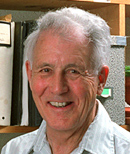
 A Dialogue with Harvard Professor J. (Woody) Woodland Hastings
THIS EVENT IS SOLD OUT
A Dialogue with Harvard Prof. J. (Woody) Woodland Hastings
Date: Thurs, Feb 21, 2013
Time: 5:30 p.m. - 7:30 p.m.
Location: McDermott, Will & Emery
227 W. Monroe, Chic
 |
The Harvard Club of Chicago and
The Chicago Council on Science and Technology
Present a Dialogue with
Harvard Prof. J. (Woody) Woodland Hastings
"Bioluminescence: Living Lights, Lights for Living"
Harvard Prof. J. (Woody) Woodland Hastings
"Bioluminescence: Living Lights, Lights for Living"
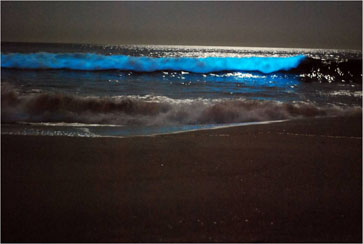
If you have seen the film Life of Pi, you have seen the spectacular beauty of bioluminescence. Take a look at the National Geographic video Bioluminescence on Camera, to see more. If you have a keen interest, make sure you attend the major bioluminescence exhibit opening at the Field Museum in March.
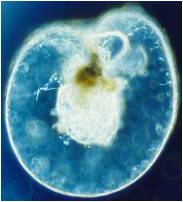
Glowing animals typically create light through luminescence. In luminescent animals, chemical compounds mix together to produce a glow. It's a lot like the way the substances inside a light stick combine to make light. Luminescence is far more efficient than incandescence. It neither requires nor generates much heat, so it's sometimes known as cold light. In the deep, dark ocean, many sea creatures make their own light for hunting, mating and self-defense.Bioluminescence expert Edith Widder was one of the first to film this glimmering world. At TED2011, she brings some of her glowing friends onstage, and shows more astonishing footage of glowing undersea life. Take a look – it’s spectacular!
Bioluminescence was earlier viewed as a fascinating feature of the living world, but one whose study seemed unlikely to contribute in any practical way. Today, bioluminescence is no longer an esoteric area of research. Applications are numerous, ranging from the rapid detection of microbial contamination in beef and water, to finding the location of cancer cells, to working out circuitry in the brain.
Why should you come? First, you will learn something! Second, Woody reputedly has some of the most spectacular slides seen at any HCC event. Come to renew acquaintance with HCC contacts and to make new contacts with the members from our partner in this event, The Chicago Council on Science and Technology.
Glowing animals typically create light through luminescence. In luminescent animals, chemical compounds mix together to produce a glow. It's a lot like the way the substances inside a light stick combine to make light. Luminescence is far more efficient than incandescence. It neither requires nor generates much heat, so it's sometimes known as cold light. In the deep, dark ocean, many sea creatures make their own light for hunting, mating and self-defense.Bioluminescence expert Edith Widder was one of the first to film this glimmering world. At TED2011, she brings some of her glowing friends onstage, and shows more astonishing footage of glowing undersea life. Take a look – it’s spectacular!
Bioluminescence was earlier viewed as a fascinating feature of the living world, but one whose study seemed unlikely to contribute in any practical way. Today, bioluminescence is no longer an esoteric area of research. Applications are numerous, ranging from the rapid detection of microbial contamination in beef and water, to finding the location of cancer cells, to working out circuitry in the brain.
| For a sneak preview Click Here | ||
 |
Some will remember Prof. Hastings as their House Master at Harvard. He is (also) a leader in the field of photobiology, especially bioluminescence, and is one of the founders of the field of circadian biology (the study of circadian rhythms, or the sleep-wake cycle). He is the Paul C. Mangelsdorf Professor of Natural Sciences and Professor of Molecular and Cellular Biology at Harvard University. He has published over 400 papers and co-edited three books.
This event is being presented jointly with the Chicago Council on Science and Technolgy. Visit their website at www.C2ST.org.
Date: Thursday, February 21, 2013
Time: 5:30 p.m. - 6:00 p.m. Wine & Cheese - Networking
6:00 p.m. - 7:30 p.m. Talk and Q & A
(NOTE: Please arrive before 6:00 p.m. After that, further security measures will be in effect in the building.)
Location:
McDermot, Will & Emery (ID required for entrance to the building)
227 W. Monroe
Chicago
Cost:
$15.00 for Members and Member's Guest
$30.00 for Non-Members
Complimentary for Crimson and Crimson Plus Members
Click here to buy tickets!!!
IMPORTANT NOTICE: Unless you are a non-alumnus/a, or just arrived in the Chicago area you are in our database. Therefore you MUST SIGN-IN, at present using your "post.harvard" username and password, before completing your ticket purchase, otherwise you will create a redundant record and will have to enter all your contact information again.
We hope to have a new, more user-friendly system later this year but for the time being this is how we must all interact with the web site. We apologize for the inconvenience. If you are not able to sign-in, please call the Club office at 847-256-1211 and they can assist you.
CANCELLATION POLICY: All
cancellations must be received within 48 hours prior to the event or the attendee who made the reservation will be charged due to costs associated with the reservation and/or the event itself, regardless of actual participation.
***********************************************************
MEMBERSHIP:
Renew Your Membership in the Club
Join the Club